
Ramapo Resident Lookup Records
Ramapo keeps no single roster of everyone in town. A resident lookup works by asking one narrow question of the record that can answer it. The Town assessment roll and the Rockland County GIS map anchor a parcel identity. The County Clerk's land index ties recorded parties to a deed. The state voter tool checks one registered voter. But it needs identity and address details first. Court files and vital records answer other narrow questions. Each office keeps its own lane. Keeping those lanes straight stops a same-name hit from masquerading as a confirmed person.
| Record | What it can confirm | Official keeper | Access route |
|---|---|---|---|
| Assessment roll | Tax owner, parcel, mailing line, value, and exemptions | Town of Ramapo Assessor | Annual PDFs and office inspection |
| GIS parcel | Situs address, section-block-lot, geometry, and districts | Rockland County GIS | Free map viewer |
| Deed or mortgage | Recorded party role, legal description, and transaction date | Rockland County Clerk | Guest viewing online, counter, or Archives |
| Voter record | Registration match, poll site, and mail-ballot status | New York State Board of Elections | Person-specific online form |
| Court or probate file | Case lead, party, date, or estate role | Courts, Clerk, and Surrogate's Court | Portal, clerk counter, or Archives |
| Vital record | Documented birth, death, marriage, or family link | Town registrar or NYS DOH | Eligibility and genealogy rules apply |
Begin with a full name plus one more fact. Property questions start with the Ramapo Assessor. Then pull the address and section-block-lot from the Rockland GIS Portal so the parcel identity holds up. For a historical person, an obituary, a library directory, or a probate lead may be the better opening record. Recorded ownership only goes so far. A tax owner or mailing address never proves that someone actually occupies the parcel.
Match a Ramapo Name Carefully
The central trap in a Ramapo resident lookup is the same-name hit. Write down the full spelling. Write down the middle initial, old postal label, and date too. Add the record number and party role before moving on. A parcel's situs is its physical spot. Its mailing address is where the tax bill goes. The section-block-lot is often shortened to SBL. It is the local parcel identifier that links an address to a map and a deed. Those details separate a person from a similarly named owner, trust, estate, or business.
For a current property trail, the Town posts final assessment roll PDFs. They cover 2022 through 2026. They are not a name-search portal. The GIS Base Map takes an address or tax ID. It returns parcel and district context. From there, the Rockland County Clerk's digital document system opens the recorded-land route. Search both grantor and grantee roles. Try spelling variants too. Keep the legal description whenever a street name changes. Keep it when an older record disagrees with the current one.
Note: Record any trust, estate, corporate, or out-of-town mailing line exactly as it appears until another official source names the relevant party.
Ramapo VoterLookup Fields
NYS VoterLookup verifies one registered voter at a time. It is not a street-wide directory. Pick Rockland County, then supply the last name, first name, date of birth, address details, and the displayed five-digit ZIP field. The service also requires cookies and JavaScript. A no-match can stem from spelling, address formatting, inactive status, a protected registration, or a recent change. Either way, it never proves a named person has not lived in Ramapo.
| Form field | How it is used |
|---|---|
| County | Choose Rockland for a Ramapo search. |
| Last and first name | Both are marked mandatory in the live instructions. |
| Date of birth | Required in MM/DD/YYYY format. |
| Address information | Required; exact subfields render dynamically. |
| ZIP Code | Displayed as a five-digit field. |
Registration records are public in New York, but only under Board supervision. Election Law does withhold some details, though. Driver's-license numbers and non-driver ID numbers stay out of view. Social Security numbers and fax numbers do too. Bulk voter data carries its own rule. A statewide or county request for voter-derived information needs a statement of elections purpose. That requirement comes under Election Law §3-103(5). For registration questions, or for a lawful way to obtain records, contact the Rockland County Board of Elections. The web form itself is not a household list for Ramapo.
Why can't a name alone drive a resident lookup? The official VoterLookup form answers that with its own required identity fields. That is exactly why it is worth a look.
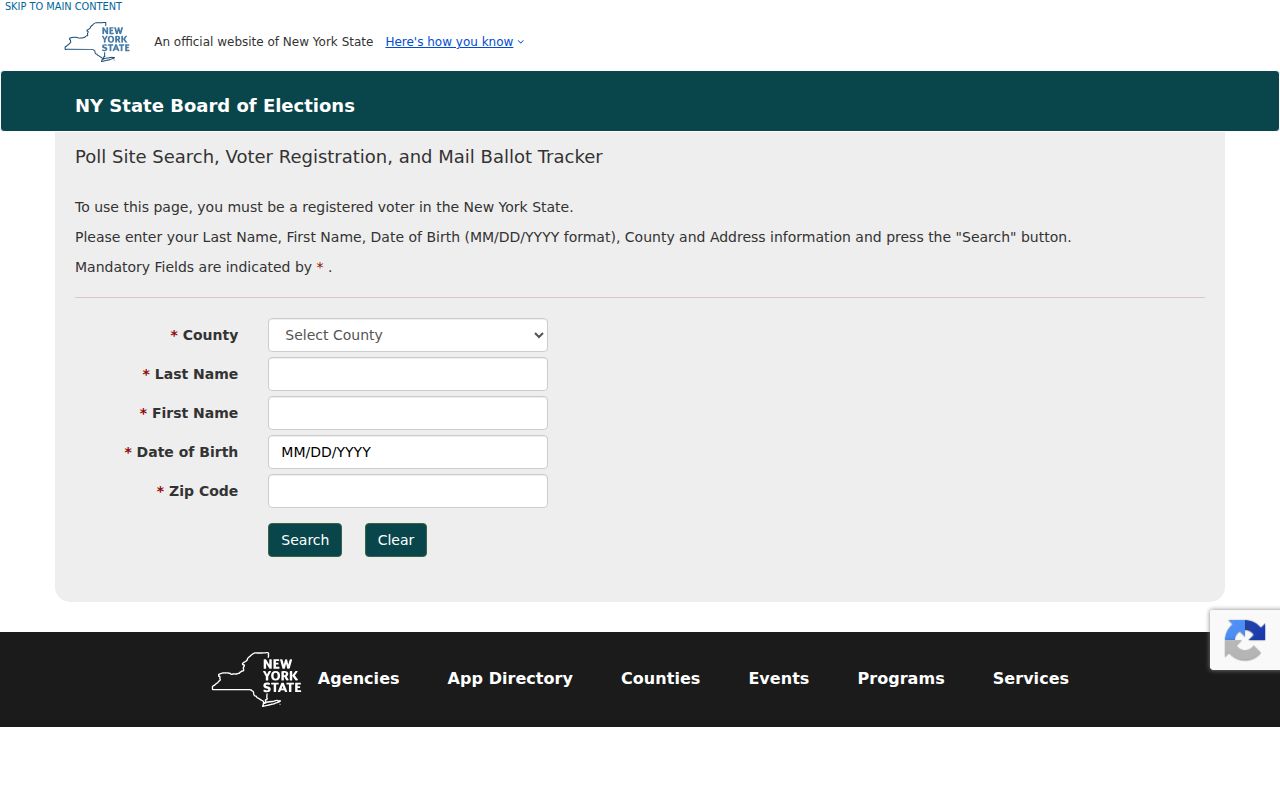
It pairs a name with birth and address details. That can support an existing match. It cannot replace the assessment roll, deed, or court record that answers a separate question.
Ramapo Court Lookup Results
NYS eCourts offers several statewide tools. They include eTrack, WebCivil Supreme, WebCivil Local, WebCriminal, and WebFamily. Guest access to NYSCEF covers participating electronic filings. NYSCEF help lets you search by case number, business or organization, first and last name, and optional middle name. County, case type, and date range narrow it further. Tax-certiorari or SCAR block and lot fields appear for some matters. Try an exact name first. Then run the spelling variants too. When the event belongs to Rockland, keep the search narrowed there.
A hit may display an index or case number. It may also show party or attorney name, case type, and filing or appearance dates. Court, judge, status, and links to dockets or documents may appear too. Treat it as a lead, not a certified disposition or proof of a current address. Sealed, adoption-related, mental-hygiene, youthful-offender, matrimonial, and not-yet-calendared matters often stay out of ordinary online results. Town cases go through the Town Justice Court. Supreme and County hard-copy files may sit with the County Clerk. Older material may sit with the Archives instead. The eCourts search landing page is the official starting point for court-based name verification.
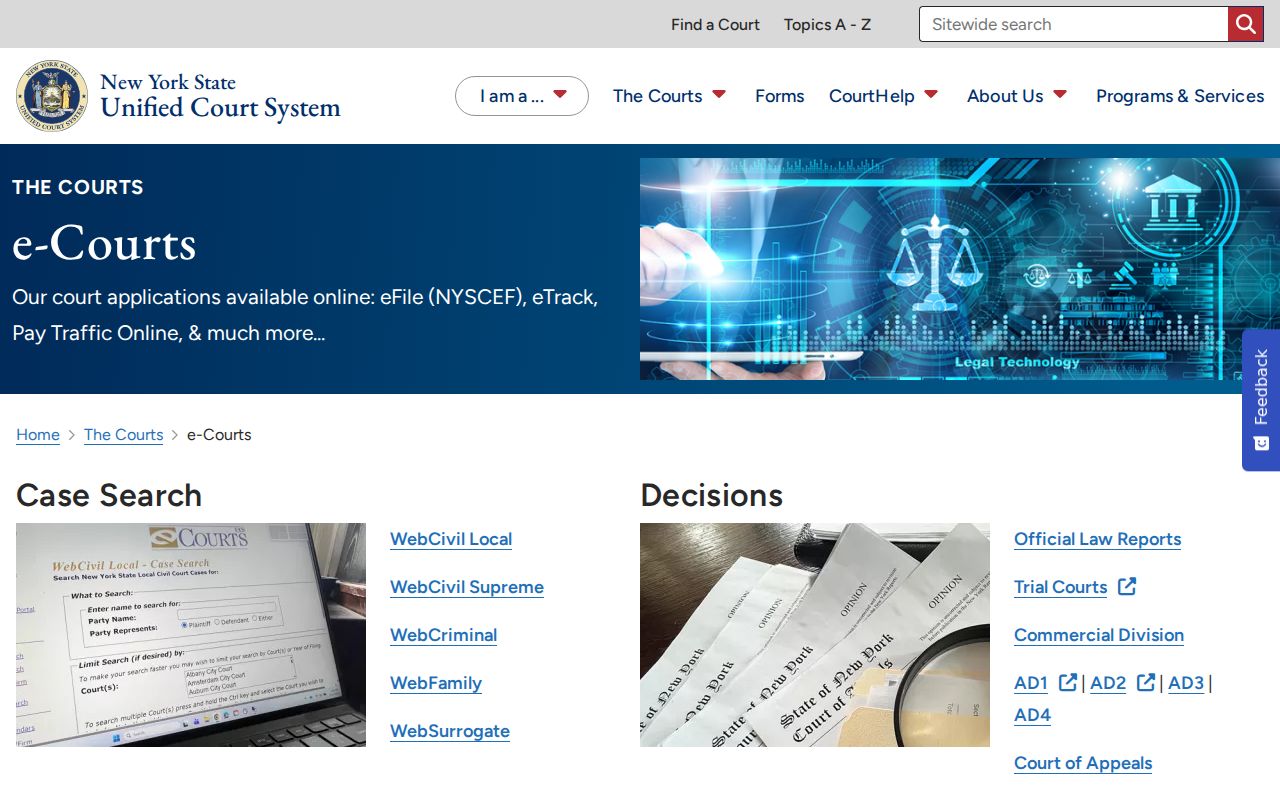
A case number unlocks the file. Note the court and the date before you make the request. The County Clerk court-records route covers the counter and file-request path, while older files may sit at the Rockland County Archives in Pomona.
Verify a Ramapo Resident Record
Keep the question and the proof apart when you check a match. A deed shows a recorded transfer. A court docket names a proceeding. A voter response tests whether a registration lines up. Used together, these records stop a resident lookup from mistaking one shared surname in Ramapo for another person entirely. When a source clashes with the address, village label, age, or date you already know, go back to the earlier record and try a new spelling or a different source rather than forcing the fit.
- Write the full name, known street or postal label, and a second identifier such as a middle initial, approximate date of birth, relative, or business name.
- Use the assessment roll and GIS to confirm the parcel's situs, SBL, owner line, and mailing line. Keep the roll year with the result.
- Search the Clerk's grantor-grantee record around the likely transfer date. Record party role, document number or book and page, recording date, and legal description.
- Check VoterLookup only for a person-specific registration match, then compare the result with the address and date already anchored.
- Use eCourts, probate, an obituary, or a vital-record route for a separate corroborating fact. Request an official copy from its custodian if it is needed.
- Docket
- A court's running record of events in a case. It points to the file but is not the court's certified final ruling.
- Index and image
- An index is the searchable listing of a record. An image is the underlying scanned document, which can have separate viewing or copy rules.
- Certified copy
- A copy issued and certified by the custodian. It is different from a web search result or an ordinary photocopy.
Older address and household questions call for the Town of Ramapo city directory collections page. Search that shelf for dated clues. Then return to the official record that can actually verify the person or transaction.
Ramapo Vital Record Routes
Vital records are not open name directories. Birth, death, marriage, and divorce files in New York sit with registrars, not lookup tools. The Ramapo Town Clerk serves as local registrar for unincorporated Ramapo. It also covers the villages of Airmont, Kaser, New Hempstead, and New Square. For events outside New York City, the New York State Department of Health keeps state copies. A marriage certificate comes from the town or city clerk that issued the license. It can also come from DOH. A Suffern, Hillburn, or Sloatsburg event may fall to a different village registrar. So settle the event municipality first.
DOH genealogy rules open older records on a schedule. A birth record may become available after 75 years when the person is known dead. A death record opens after 50 years. A marriage record also opens after 50 years, but only when both spouses are known dead. Direct-line descendants can request a waiver with relationship and death proof. Genealogy copies stay uncertified. Certified copies carry narrower eligibility and demand identification, relationship papers, or a court order. DOH's genealogy fee starts at $22 for a one-to-three-year search. Longer search periods follow the published fee ladder. They can take eight months or more.
New York's genealogy instructions lay out the record-age rules. They also cover the fee ladder and the application route for historical family research.
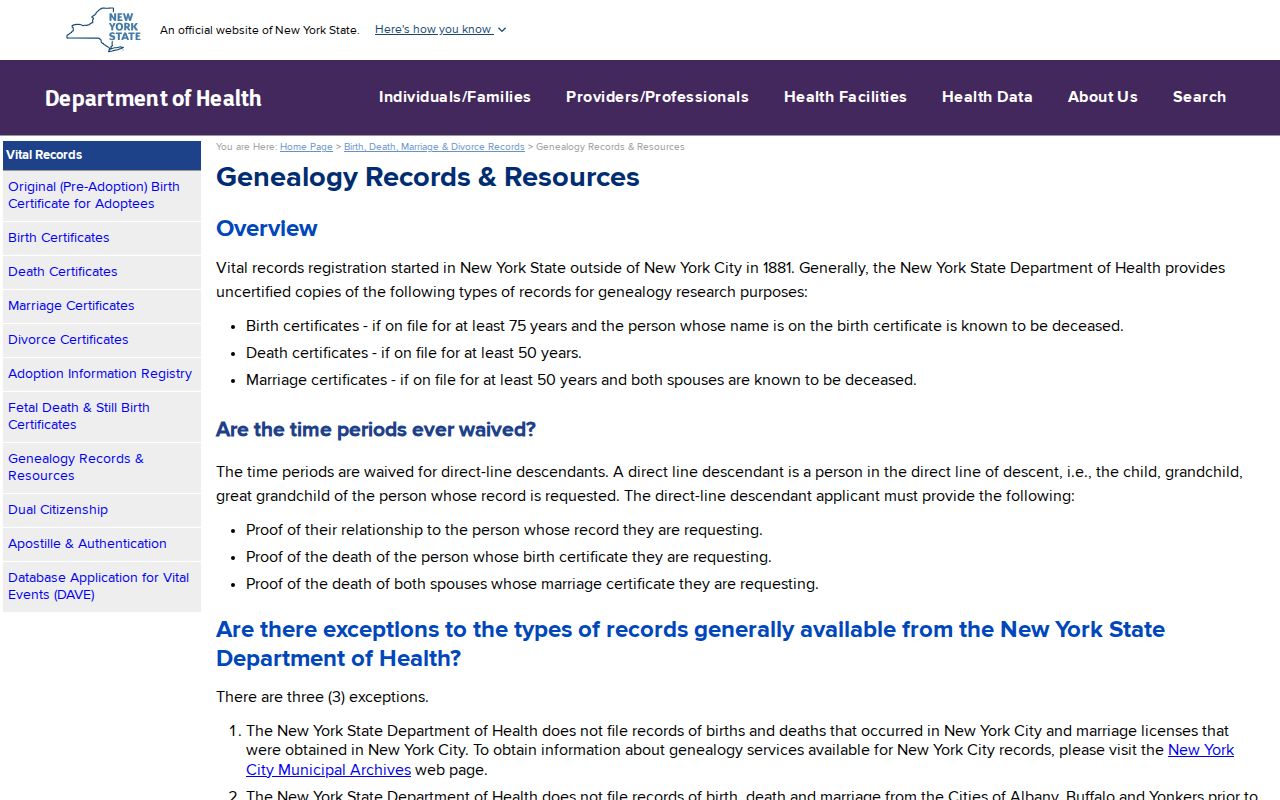
The genealogy route can confirm an older family event without turning a current certified record into an open search result. The Ramapo Town Clerk can confirm local routing and current instructions across its registrar jurisdictions.
Note: DOH holds the divorce certificate, while the decree and case file remain with the court of origin.
Ramapo Lookup Trails for Family
A resident lookup often begins with a family question, not a current address. Heirs should start with a Surrogate's Court case or index. Then pair probate papers with an obituary and a deed. Probate names the decedent, executor, administrator, heirs, and counsel. An address in an old filing is historical evidence, though, not a claim about where anyone lives now. The County Archives holds historic court and naturalization material. The court can point you to the right file request route.
Adoption searches follow a different door. The NYS Adoption Information Registry offers non-identifying information and reunion matching for eligible participants. It does this without opening sealed adoption or birth records. For a former classmate, Suffern Free Library's Ramapo Room, local newspapers, yearbooks, and school alumni channels work well as historical sources. Ramapo has no official complete yearbook index. Business and license databases can confirm an entity role or professional affiliation. But their address fields prove nothing about where a person lives. The NYSED verification service returns profession, license number, city and state address, licensure date, registration status, and discipline information where it applies. Treat it as one record-specific cross-check.
Ramapo Resident Lookup Limits
New York's Freedom of Information Law lets anyone request existing agency records. The statute is Public Officers Law Article 6. Exemptions still apply. Name the record and the date range. Include an address or SBL, the format, and how you want delivery. Under §89(3)(a), an agency generally must respond within five business days. It may grant, deny, or acknowledge the request. It may also state that a diligent search failed to locate the record. FOIL never forces an agency to create a new record. It also leaves some records closed. Sealed court files, restricted vital records, DMV personal data, and protected addresses stay shut.
The New York State Address Confidentiality Program shields an eligible participant's physical location. It uses a substitute address and mail forwarding. A participant may add the Statement of Confidential Voter path through the Board of Elections. Voter records carry their own statutory limits. Older recorded documents can hold identifiers that should not be republished. Corrections go to the actual custodian. The Assessor handles a roll, and the Board of Elections handles registration. The court clerk keeps a docket. DOH or the local registrar covers a vital record, and DOS or NYSED covers entity or license information.
When an online result dead-ends, the trail keeps going. Call the clerk, visit the counter, ask Archives about older holdings, use a library's microfilm, or file a focused FOIL request with the right agency. Each channel serves a different purpose. That distinction protects the evidence and the people named in it.